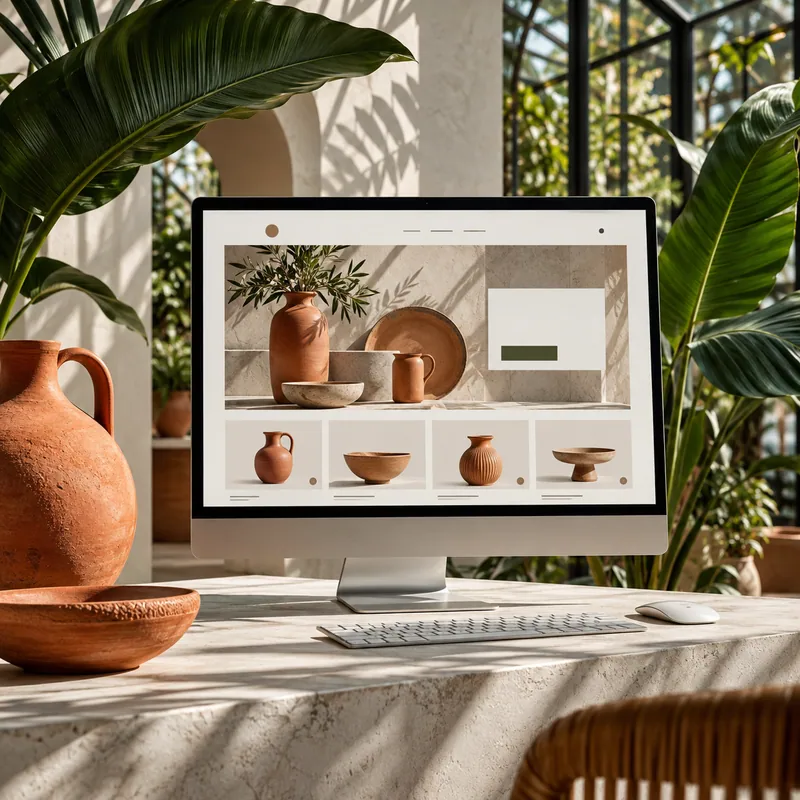
Does your website do justice to your work? The Master can help create a site that reflects your business, explains what customers can expect and makes it easy to get in touch. A small first version can grow as your business develops.
A website with agreed pages, photographs, clear navigation and working contact options. Products, orders, delivery and payment will be planned separately for a shop.
Where it helps
Builders can show projects, breeders present animals and care, travel organisers explain routes, and professionals share portfolios and receive enquiries.
A website that reflects your business
From a first visit to a clear next step
Visitors arrive with a practical need: finding a renovation specialist, comparing windows, booking grooming or choosing a trip. Page structure should answer those questions. Services, photographs, terms and contact options belong where people expect them. A private practice needs reassurance and discreet booking; a manufacturer may need specifications, documents and a quotation request.
Online stores: what happens after checkout
An online shop starts with your sales rules: who buys, where stock figures come from and who updates prices or fulfils orders. Product variants, filters, discounts, payments and delivery need to work together. Wholesale buyers may need separate prices and accounts. Connections to CRM, inventory or ERP software are scoped around real data and the capabilities of each system.
Possible solutions
Business and professional websites
Present services, explain your approach and receive enquiries. A practitioner, craftsperson or family business each needs different reassurance. Content is organised around your customers, relevant work examples and appointment arrangements.
Online stores
Sell physical or digital products through product pages, options, stock information and checkout. Delivery, cancellation, returns and price sources need early decisions. Wholesale accounts, imports and inventory connections are scoped separately.
Catalogues and portfolios
Show products, projects or collections without requiring online payment. Categories and attributes help visitors narrow their choice. Portfolios benefit from context and outcome details; catalogues need codes, dimensions and a quotation route.
Multilingual websites
Serve visitors across languages and countries. Translation URLs, equivalent-page switching, contact formats and local terminology need planning. Translating buttons alone does not replace a complete explanation of the service in the visitor's language.
Landing page
A focused page for a course, service launch, event or campaign. Benefits, terms, likely questions and the next step follow a clear sequence. A broad range of separate services usually needs a fuller site structure.
Business website
For a business with multiple service areas, partners or branches. Services, capabilities, documents, projects and vacancies get a clear place. Navigation should support both a first-time visitor and a buyer seeking precise specifications or partnership terms.
Small introductory website
A compact introduction explaining your work, examples and contact options. Useful for a new practice or business with a focused offer. Small scope still needs clear wording and comfortable use on a phone.
Questionnaire and solution finder
A short sequence of questions guides visitors to a service, product or next step. Answers determine the route and the result explains its recommendation. Contact details are requested at a useful point, without forcing people to guess technical terminology.
Event invitation and registration
An event page with a programme, location and registration for a wedding, meeting, seminar or tour. Attendance confirmation, capacity and guest requests can be included. Private events need decisions about page access and participant visibility.
Marketplace and listing platform
A platform where participants publish products, rentals, services or listings. Beyond a catalogue it needs roles, moderation, publishing rules, reporting and spam controls. Payments, commissions and permitted categories require separate decisions; a limited initial scope helps.
Popular website platforms — and custom development
Already have a website? The familiar system may be worth keeping. The Master works with popular platforms, repairs problems and continues unfinished projects. If a ready-made solution limits your idea, the website can be coded specifically for your task.
HTML, CSS, JavaScript, PHP · tailored interfaces, forms and integrations
Not sure what your website uses? Send a link. The available changes depend on the project, its version and the settings that can be accessed.
An online store that is easy to buy from — and easy to run
Attractive product pages are only the beginning. Customers need to find the right item easily, while prices, stock and orders need a clear workflow. Before development, the way your business sells will be reviewed so that the store gets useful features and room to grow without unnecessary complexity.
Who buys, and how you sell
Retail customers, businesses, wholesale buyers or direct customers of a manufacturer? Prices, discounts, personal terms and customer accounts will be planned accordingly. A store with several sellers also needs agreed roles, settlement rules and responsibilities.
Products, prices and stock
The catalogue will have useful categories, sizes, colours, variants, filters and bundles. If product data already exists in spreadsheets or another system, import and update rules will be defined. Large catalogues also need fast search and practical administration.
What happens after a purchase
The order journey will cover the basket, checkout, payment, delivery, stock reservation and notifications. Orders can be passed to CRM or inventory software. Statuses, cancellations and returns will be arranged to keep the customer informed and prevent information from being lost.
The result is a store with a clear workflow: customers can place orders comfortably, and you can handle them through to completion. Features, external services and development stages are agreed before work begins.
Perhaps this is what you need
The website needs to reach customers abroad
Language versions, clear contact details and sensible language switching can be prepared, with the wording, tone, service names and local formats reviewed for the intended audience.
Supplier files or spreadsheets can be prepared for import, including names, variants, specifications and images. A small sample will be checked before processing the full catalogue.
The shop can be connected to an agreed source of prices and stock. Update rules, error checks and a fallback for unavailable supplier data will be defined.
Lighting, colour, backgrounds and image sizes can be made consistent for the shop while preserving the product’s real appearance and important details.
Start with what you offer and the questions customers ask most often. An existing website, photographs, service list or small catalogue sample will help. If those materials are not ready, the first step is a practical list of what the initial website actually needs.
Before launch, checks cover mobile layouts, forms and navigation. For a shop, they also cover a sample order, quantities, available payment test modes and notifications. You will know how content is updated and which external services carry separate fees.
Yes, when the platform and structure allow for it. Mention likely next steps such as orders, additional languages, appointments or customer accounts so the initial choices do not make later changes unnecessarily difficult.
Will enquiries start as soon as the site launches?
Publishing alone does not create demand. Your offer, relevant traffic, credibility and an easy contact process all matter. Search-ready pages, clear headings and descriptions provide a foundation; further improvements should be guided by searches and enquiries.
The main focus is Europe, including the Baltic countries and Northern Europe. Enquiries are also welcome from other countries, including the United States and Canada. Projects are discussed online, with a suitable time agreed around your time zone.